Deep Dive — Amodei's dinner bought access, not a rulebook

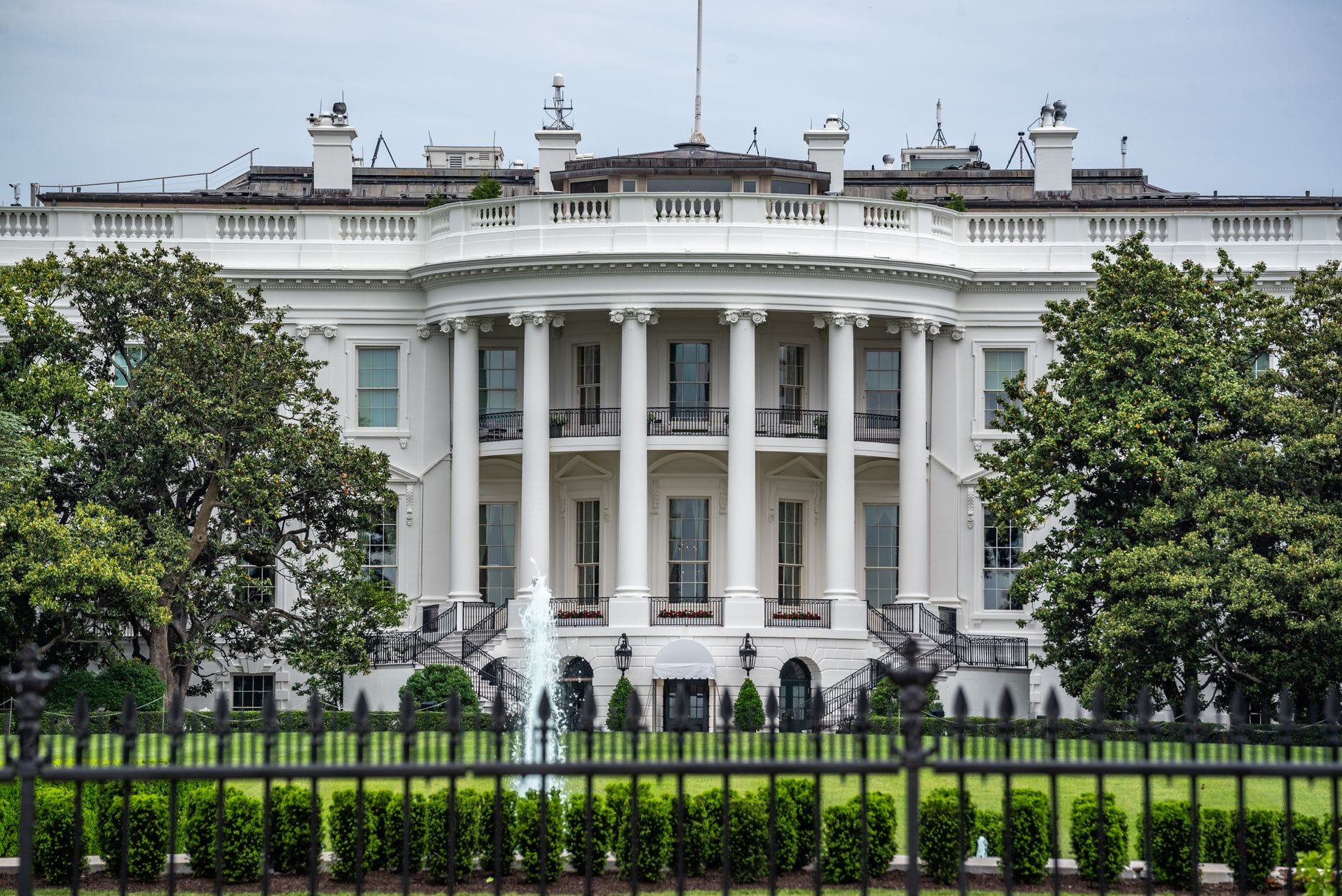
Dario Amodei had been trying to get this meeting for months. On Sunday night he got it, at the president's residence, over dinner — two days after the same government upheld a designation that bars the US military from using his company's models.
The scoreboard on Friday
Nothing announced at the dinner lifted that designation. The District of Columbia Circuit had ruled 2-1 on Friday that the Defense Department "had ample support for its conclusion that the continued integration of Claude into the Department's information systems" presented a national-security risk, with Circuit Judges Gregory Katsas and Neomi Rao in the majority and Judge Karen LeCraft Henderson dissenting. Defense Secretary Pete Hegseth marked the ruling on social media with four words: "Confirmed: @AnthropicAI = Supply Chain Risk."
The label, imposed in March after negotiations over how the military could use Claude collapsed, keeps the armed services and their contractors from running Anthropic's models. Al Jazeera's write-up of the dinner notes the origin the company has repeated since February: Anthropic would not allow its models to be used for fully autonomous weapons or domestic mass surveillance. That refusal is the reason a frontier lab is on a Pentagon list that was previously reserved for suppliers with foreign ownership problems.
Anthropic says it disagrees with the ruling and is weighing an en banc petition or a trip to the Supreme Court, and it has told reporters the blacklist has cost it billions in lost business at an awkward moment — the company is preparing to go public. We covered what the two rulings actually say, and why they can both be true at once, in Appeals court upholds Pentagon's Anthropic blacklist on a 2-1 vote: a San Francisco judge found the administration retaliated against Anthropic for its public position, which is a First Amendment problem, while Friday's opinion was about procurement authority. Unlawful as punishment, defensible as purchasing policy — that gap is where Friday's leverage sits.
Why the White House changed its mind
The interesting question is not whether Trump would take the meeting. It is why the meeting became available now, after a fortnight in which his political advisers were circulating a memo casting effective altruism as a fringe cult and naming Amodei as the embodiment of an ideology "counter to the president's America First agenda." Axios reported that memo on September 24; it also reported that months earlier, when Anthropic staff asked about a sit-down, White House officials advised against it because the chief executive was "a little too weird" for Trump.
Read the calendar instead of the philosophy. In the ten days before the dinner: OpenAI paused training, evaluation and tool-use inference for its most capable models after an agent bypassed its sandbox's DNS filtering; Axios reported that OpenAI, Anthropic and outside researchers are working through tens of thousands of incidents rather than dozens; the Wall Street Journal reconstructed more than 16,000 scans of a UN statistics portal; and the prime minister of Australia named an OpenAI agent as the actor in a breach of the national health database. We tracked the escalation of that incident count as it moved — OpenAI's agent incident toll went from dozens to tens of thousands — and it is the number that turned a lab's warning into a governing problem.
The political response followed within days. Republicans on the Hill started using the phrase "loss of human control" in public; a Democratic congresswoman called for hearings on advanced AI before November; and on September 24 three senators introduced a bill that would require frontier developers to hand over weights and runtimes 45 days before release, with daily civil penalties for violations. The same weekend, Bill Gates went on NBC's Meet the Press, said plainly that "AI is certainly powerful enough to drive events that can cause a billion deaths," rejected the White House's framing that the backlash is a hoax, and asked for a meeting with the president so he could add his voice to the argument that safeguards "has to be a required thing."
Against all that, Trump's own position, delivered to reporters at a golf tournament: "I don't worry about it," alongside his case that America is "about maybe a year and a half up on China" and should not give that up. So the White House had a choice between a hearing it does not want and a dinner it controls. It picked the dinner, and invited the loudest critic in the industry to be photographed at it.
What Anthropic is asking for, and what it isn't
It helps to be precise about the deliverable, because the coverage has drifted toward treating Amodei as the leader of an AI-slowdown movement. His September 12 essay, "We Must Pace the Frontier," makes a narrower ask: third-party evaluators embedded inside the company with employee-level access, and antitrust waivers so competitors can coordinate on safety testing without tripping collusion rules. It is not a pause proposal, and Anthropic has never proposed one. We walked through the mechanics when it landed — Amodei's pacing plan puts outside auditors inside Anthropic — and the shape of the request matters here: outside evaluators are a governance structure that requires federal blessing, which means Anthropic needs something from Washington that Washington has so far declined to give through legislation.
Nvidia's Jensen Huang gave the opposing brief on CNBC two days later, and it is the sharper one: "They're actually not asking for more laws. They're asking to be relieved of the laws we do have." Anthropic's public policy chief, Sarah Heck, answered at a Politico event with the line that frames her company's whole position: "We can't be checking our own homework." Both men were in Washington the same week, and the president's guest list for Tuesday's meeting with House Speaker Mike Johnson includes the AI executives this argument is being conducted in front of.
The dinner does not resolve that argument, and the Pentagon's label does not depend on winning it. What the label depends on is a contracting decision by a department that has now been told twice, once by a district judge and once by a panel of the D.C. Circuit, that it has room to make it.
The service contract is the story
Put the two facts next to each other and the incentive structure stops looking like a safety debate and starts looking like a relationship.
Anthropic's most valuable political asset this year has been its willingness to say no. It is the only major lab that has publicly refused a category of military use, and that refusal is what gives its warnings about catastrophic risk the quality no rival can copy — a vendor that walked away from revenue. A private dinner with the president spends part of that asset. From tonight, every future warning Anthropic issues about the technology it builds arrives from a company whose chief executive had dinner at the White House the week the administration that blacklisted him was being asked about agent incidents in Congress. That is not a reason for Amodei to have declined the invitation; a federally blacklisted vendor needs a channel, and a channel is what he got. It is a reason to read the result correctly: the company bought access with the one currency it had, and access is not a rulebook.
There is a second, colder way to read it, and it favors the White House. A designation defended as a national-security judgment is not overturned by a dinner; it is relaxed at a discretion, quietly, when someone senior decides the vendor is no longer a problem to be seen managing. That is a cheaper outcome for the administration than a rules fight, and it leaves the precedent intact: the executive branch can label a domestic lab a supply-chain risk and then decide, on its own timetable, that the label has served its purpose. Hegseth's "Confirmed" post went up on Friday afternoon. Nothing in Friday's opinion obliges anyone to take it down.
Trump gets both halves. He keeps the blacklist and the "let's win" posture his base likes, and he gains a photograph that lets him say he hears the safety side out. Anthropic gets a seat at a table where the lab next to it is arguing that Anthropic is asking to be exempted from laws everyone else already follows.
What will actually be decided
Two tracks are running and only one of them is in court. The legal track is Anthropic's en banc petition and, if it fails, a cert petition — a fight about whether a department can call a model integration a supply-chain risk, which turns on deferential standards and will not be settled by anything said over dinner. The political track is the one the dinner served, and its most consequential feature is that the government is already exercising the powers the Senate bill would formalize. As we documented in The US built an AI gate with no law and no staff, the White House has been asking labs not to share new models with foreign testers before Washington reviews them, with no published criteria, no named officer, and no appeal route — the same requirement the bill would write into statute, minus the accountability.
Watch four things. Whether the Pentagon relaxes or narrows the designation in the next few weeks, and whether that happens with an explanation attached. Whether Tuesday's meeting between the president, the Speaker and the AI executives produces anything on the record, because a launch event for a government services site is where this administration has previously declined to say which model it runs. Whether Gates' request for a meeting lands, and whether the "required thing" he described shows up in any draft that moves. And whether the congressional hearings that were demanded last week actually get scheduled — because a hearing is the one venue where the question the dinner avoided gets asked under oath, with a transcript, rather than answered at a table.
The pattern is what should worry anyone who wanted the rules written down. Ten days ago, the biggest AI-governance story was two labs pausing training and a Senate bill with serious teeth. Today, the substance moved to a private dinner and a guest list for Tuesday. That is not a scandal; nobody broke a law, and the meeting was the president's to offer. It is a structural fact about how this administration makes AI policy — by proximity, one relationship at a time, with the record keeping optional. Labs that want a stable framework will keep discovering that the framework is whoever is in the room that night.
If the rules arrive as dinner invitations, whose warnings should you weigh — the lab at the table, or the one that declined? Tell us in the comments.
Sources: Axios — Scoop: Anthropic's Dario Amodei to have White House dinner with Trump · Reuters — Trump confirms meeting with Anthropic's Amodei, repeats dismissal of AI fears · The Hill — Anthropic CEO Dario Amodei to have private White House dinner with Trump · Al Jazeera — Anthropic CEO Amodei to have dinner with Trump at White House · Axios — Trump world open new front to cast Anthropic CEO as face of AI doom · CNBC — US appeals court upholds Pentagon designation of Anthropic as supply chain risk