Apple's new iPhone is an AI phone wearing a phone costume

Apple held its first iPhone event under CEO John Ternus on Wednesday and shipped the iPhone 18 Pro, the foldable iPhone Duo, AirPods 5, and two watches. Read the spec sheets and it looks like an ordinary S-year. Read what the silicon and the software actually do and one thing is clear: Apple is no longer selling a phone that runs AI features. It is selling an inference device that happens to make calls.
What shipped, in one pass
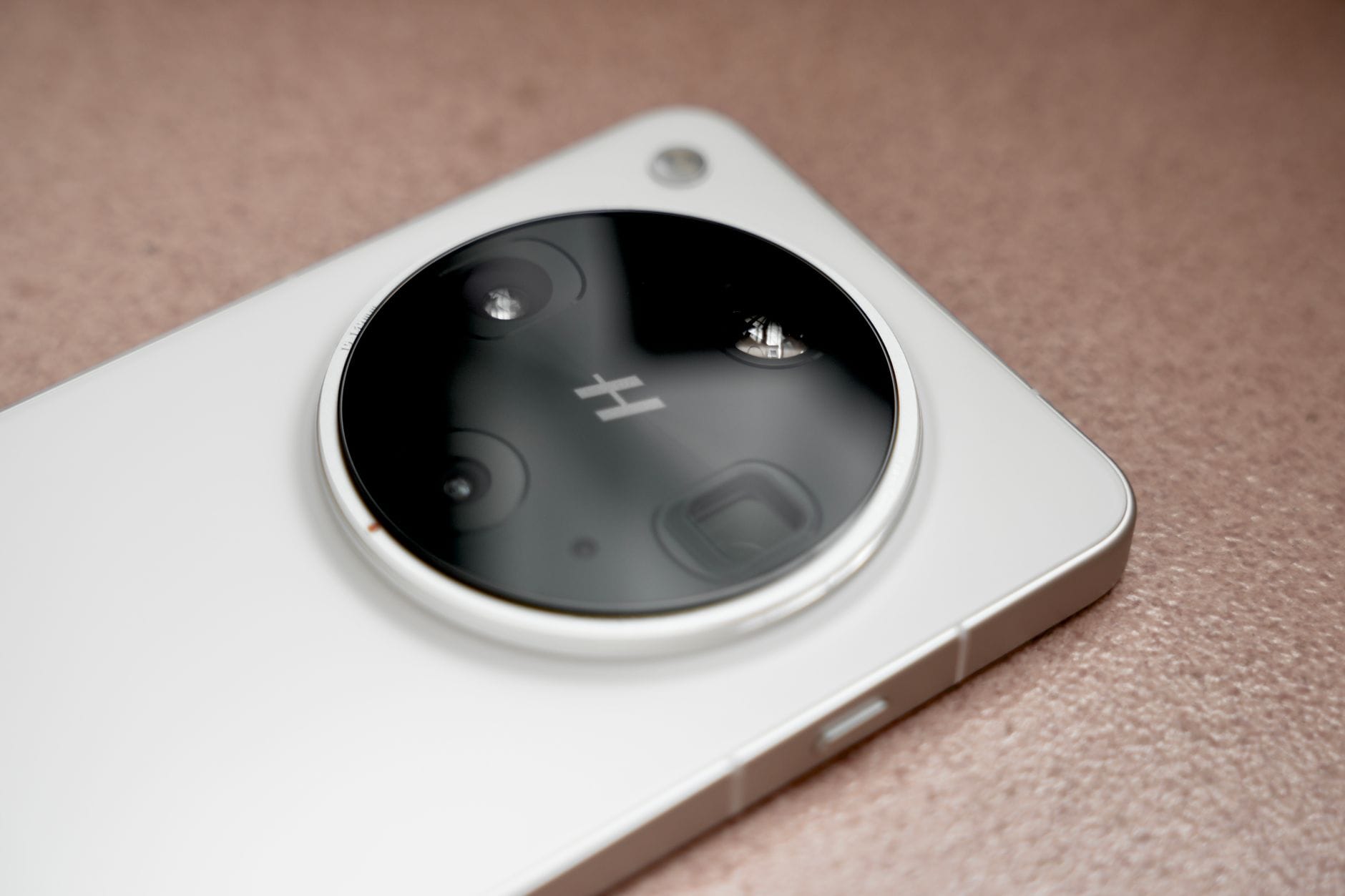
The iPhone 18 Pro and 18 Pro Max get a 48-megapixel main camera with a variable aperture — six laser-cut blades move between four settings, with manual control and a developer API — plus a smaller Dynamic Island that can show three Live Activities at once. They start at $1,199 and $1,299, $100 more than last year's Pro pair, with a new 2TB tier. Pre-orders open September 12; they ship September 18. Apple skipped the base iPhone 18 entirely, leaving the fall lineup as two Pro models and the foldable.
The iPhone Duo is the headline: a 7.6-inch inner display, 5.4-inch outer, grade 5 titanium, a hinge Apple says is built from more than 100 components, Touch ID in the side button instead of Face ID, eSIM only, and Apple Pencil support "later this year." It runs the same A20 Pro, starts at $1,999, and doesn't reach stores until October 23. AirPods 5 land at $129 with noise cancellation, and the Apple Watch Series 12 samples heart rate every five seconds.
The chip is the strategy
A20 Pro is Apple's first 2-nanometer iPhone silicon, and the number that matters is not the CPU. The 6-core CPU gains about 20 percent and the 7-core GPU about 40 percent over A19 Pro, which is a normal year. The interesting figure is the Dual 16-core Neural Engine — 32 cores total, which Apple says doubles the AI processing power of the previous generation — paired with 50 percent more memory bandwidth, since on-device models are bandwidth-bound far more often than they are compute-bound.
Thermal design tells you what Apple thinks the chip is for. The new packaging puts memory beside the die rather than on top of it, taking it out of the chip's thermal path so A20 Pro can mount directly to a vapor chamber with three times the surface area of the iPhone 17 Pro's. Apple claims up to 40 percent better sustained performance on the 18 Pro and up to 35 percent on the Duo. You do not build a vapor chamber for a camera app. You build it because sustained inference is now the workload, and throttling an assistant mid-sentence is worse than dropping a frame.
That is the honest read on Ternus's opening argument. He described the "intelligent personal hub" — always with you, powerful enough to run models locally, connected enough to reach the cloud, with cameras and microphones to see and hear — and then pointed out that the description lands on a phone. The jab at rivals was unusually direct: "others see [users' personal] data as something to collect and store… trust only goes so far when your data is no longer yours to control; that's why Apple Intelligence runs on device whenever it can."
The quiet feature is the one with teeth
Late in the event Apple introduced Reference Image. When you take a photo on an iPhone 18 Pro, the main sensor captures signed sensor data, and Apple's Private Cloud Compute turns it into what the company calls an unalterable image — a "digital negative" you can compare against later versions of the same shot to prove what the camera actually recorded. It lives in the Photos app at first, with APIs coming so other apps can verify. Apple also said it will support Google's SynthID standard to flag images made or edited with AI.
This is the more consequential announcement than the foldable, because it is Apple entering the provenance fight on its own terms rather than joining C2PA. That matters given what we found last month when C2PA camera proofs can be forged on a rooted Pixel — a researcher produced camera-signed forgeries that verification tools accepted, because attestation checks a device's state at provisioning time and a rooted phone looks pristine. We flagged the rumor in Apple's iOS 27 could prove iPhone photos aren't deepfakes; the shipped version is more interesting than the rumor, because routing sensor data through Apple's own servers means the trust anchor is Apple's hardware and Apple's cloud, not a coalition's certificate chain.
Who wins, who loses
Apple wins the thing it most needs: a reason to upgrade that isn't a benchmark. Counterpoint has AI ranked around sixth or seventh among consumers' upgrade motivations, and a fast neural engine doesn't move that by itself — a photo you can prove is real might. Google loses the cleanest version of its own pitch; Google's Pixel 11 makes Gemini the centerpiece of the AI phone war shipped weeks ago with agentic Gemini at the center, and Apple's answer is the opposite bet: same category of ambition, private by default, verified at the sensor.
Publishers and platforms are the unpriced party. If reference images become checkable inside apps, the cost of passing off a generated image as a photograph goes up at exactly the moment it had gone to zero — and whoever controls the verification API controls a small but real piece of the truth infrastructure.
The skeptical case
The fine print is where the confidence should drop. Siri AI arrives September 14 as a beta, English only, with French, Japanese, Korean, Portuguese and Spanish coming in October — and it will not be available in the EU on iOS, iPadOS or watchOS at launch. Apple's own footnotes say features relying on server-side models are subject to daily usage limits and that "expanded access to such features will be available for a fee in the future." A private assistant that meters you and then sells you more is not a different business model from the cloud assistants; it's the same one with better branding.
Two more details deflate the hardware story. The new on-device model also runs on iPhone 17 Pro, 17 Pro Max, iPhone Air, and recent iPads and Macs — so the 18 Pro is not a gate to the capability. And Reference Image reportedly isn't launching in the EU or China, which for a provenance standard is close to fatal: a proof that doesn't travel is a label.
What to watch
Three things decide whether this was a strategy or a spec bump. Whether Siri AI leaves beta this year, or joins the long list of Apple Intelligence features that shipped late. Whether any social platform, newsroom, or verification tool actually wires up the Reference Image API — an unread standard is decoration. And whether the $1,999 foldable clears its October 23 launch with supply intact, with smartphone DRAM still costing roughly four times what it did a year ago.
Ternus's first event was disciplined, and that was the point. Apple didn't invent a new AI device; it argued the one in your pocket is the right one, and spent a 2-nanometer chip and a vapor chamber making sure it can hold the argument.
Is a camera-signed "digital negative" real proof, or just a better label — and would you pay for more Siri if free access is capped? Tell us in the comments.
Sources: Apple Newsroom — iPhone 18 Pro and iPhone 18 Pro Max · Apple Newsroom — iPhone Duo · Apple Newsroom — AirPods 5 (Siri AI availability and usage limits) · Ars Technica — iPhone 18 Pro adds variable aperture · TechCrunch — Apple has a new way to prove your iPhone photos aren't AI slop · TechCrunch — Ternus says the best AI device is still the iPhone