Deep Dive — The AI buildout is now a fight for factory slots


Amazon did not place an order for backup generators this week. It took an option on its supplier's shares, vesting only as the generators get bought. That instrument, not the grid connection, is the story of the AI buildout's next phase.
The filing landed Wednesday evening with no press release attached. Generac disclosed that it had issued a warrant to Amazon.com NV Investment Holdings for up to 1,693,745 shares at $200.93 each — roughly 2.6% of the company on a fully diluted basis, and about $340 million at the exercise price. Slightly under 308,000 of those shares vested immediately. The rest vest in tranches tied to one thing: how much Amazon actually pays Generac for backup power generators for its data centers, up to $8 billion in aggregate payments. The warrant runs to September 2033. Alongside it, the two companies signed a long-term supply agreement, with initial deliveries expected to total $2.4 billion in 2027 and 2028. Generac's stock rose more than 40% in after-hours trading on a company with a market capitalization that closed the day near $10.3 billion.
Read the warrant as a contract term and it says something specific: Amazon is not buying generators, it is buying a place in a factory queue, and it wants the supplier's equity as collateral against the promise that the queue moves.
Why the buyer gets paid
The instinct is to file this under financial engineering and move on. The more useful reading is about leverage, because the warrant points the opposite direction from the one the AI power narrative usually assumes.
Generators are scarce. Power is the constraint everyone names, and the arithmetic behind that is now well documented — the ten-minute version lives in How Much Power Does AI Actually Use?. But scarce product does not produce a warrant. A supplier with pricing power charges more; it does not hand over equity. GE Vernova, which is genuinely sold out, is doing the first thing: its gas turbine order book ended the second quarter at 116 gigawatts, up from 100 GW the quarter before, and management guided to at least 125 GW under contract by year-end. The company is taking reservations for 2031 deliveries and expects more than half of those slots contracted before the year is out. Turbine prices are up 10% to 20% year over year. Nobody is buying GE Vernova's stock to be allowed to order a turbine.
Generac paid because Generac is the challenger, not the incumbent. Its data-center backlog was about $1.6 billion as of late July, after roughly $1 billion of fresh orders in a single quarter, including close to $700 million of 2027 volume from its first hyperscaler customer. It signed a second global supply agreement in late June. It is telling investors to expect about $4 billion of identified data-center volume through 2028. Set that against the generator market it is entering: a market where Caterpillar, Cummins and the rental fleets already sit, where the qualification process involves factory audits and performance reviews, and where a hyperscaler's multi-year commitment is the difference between a growth story and a slide. Handing Amazon 2.6% of the equity, contingent on purchases, is the cheapest way to convert a prospective buyer into a committed one. The stock reaction — up 40% on the news, adding several hundred million dollars of market value over the warrant's exercise price — says the market judged that trade as favorable.
The same reading explains the deal eight days earlier, when Qualcomm issued Amazon warrants for 25 million shares at $161.26, about $4 billion, tied to as much as $60 billion of business — Qualcomm hands Amazon a $4B stake option to win AWS inference silicon. Qualcomm is not scarce in data center silicon; it is a newcomer to a market where Nvidia owns the default and Amazon designs its own accelerators. The equity was the price of a beachhead. In April, Oracle received a fully vested warrant for 3,531,073 Bloom Energy shares at $113.28 — $400 million — after agreeing to procure up to 2.8 gigawatts of fuel cells, with an initial 1.2 GW contracted. There the buyer had leverage and the seller wanted the anchor customer's name on its order book.
The instrument is the same in all three cases. It exists because the scarce thing is no longer capital and no longer silicon. It is manufacturing capacity, and manufacturing capacity is allocated by people who need a reason to allocate it to you.
The bottleneck moved down the bill of materials
The evidence for that claim is in lead times, and lead times are where the AI buildout's schedule actually gets written.
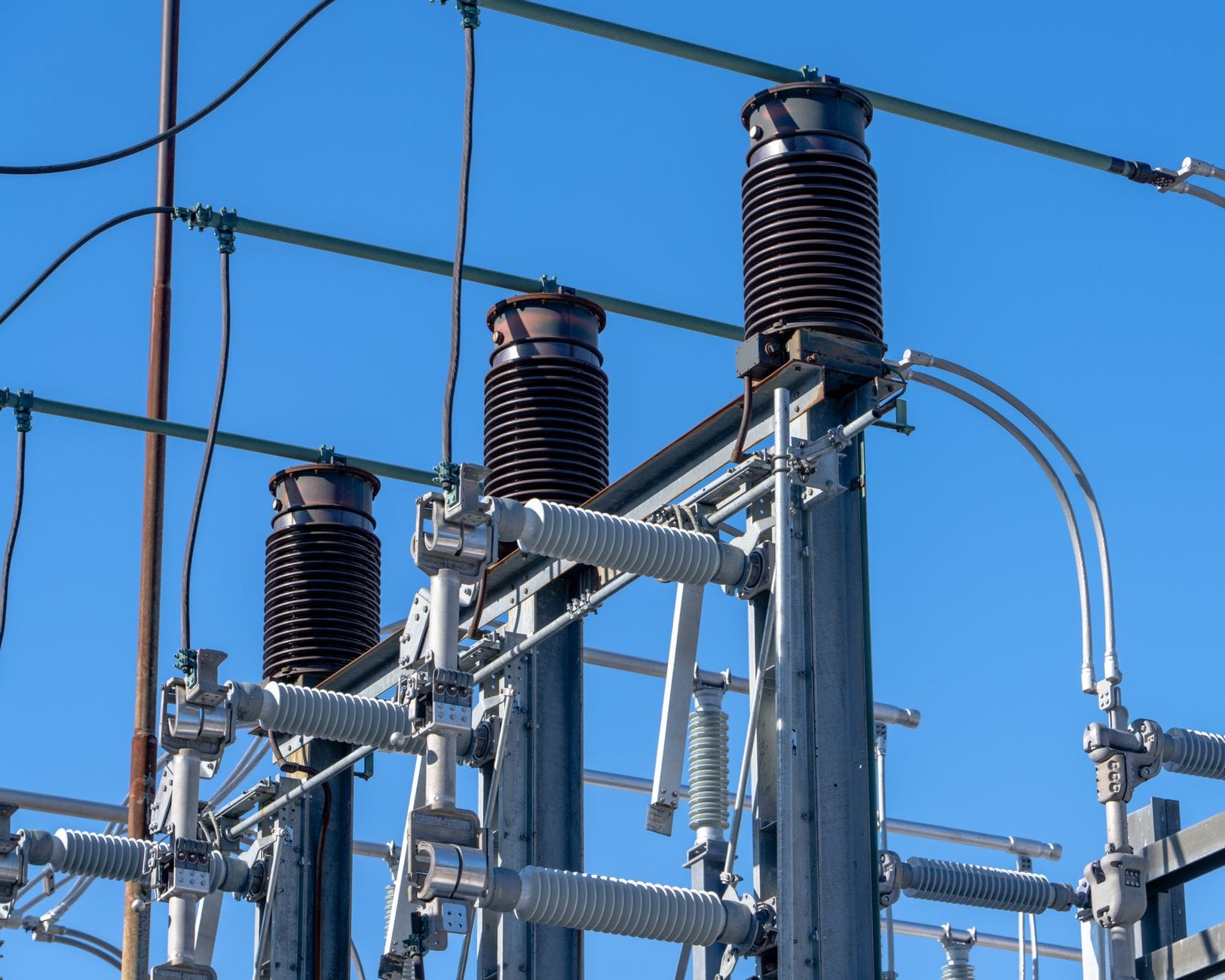
A gas plant is not a turbine. It is a turbine, a heat-recovery boiler, a step-up transformer, switchgear, breakers and relays, and every one of those has to land before a megawatt reaches a rack. Gas turbines from the three manufacturers that build most of the world's large units now carry lead times of roughly three years, with combined-cycle projects stretching five to seven years and some as long as eight, according to RMI. Medium-voltage switchgear ran 44 weeks on Wood Mackenzie's second-quarter 2025 survey; by mid-2026, one construction group's tracking had 5/15 kV metal-enclosed gear at 52 to 72 weeks and 38 kV metal-clad gear at 78 to 104 weeks. Large power transformers — the gray box that steps voltage up to the grid — sit at three to five years in the United States, against 24 to 30 months before 2020. Crusoe, an AI data center developer, has started building its own switchgear to get around the wait.
That queue produces a number that should sit in every AI capacity forecast: only about one-third of the 12 to 16 gigawatts of US data center capacity planned for 2026 was actually under construction as of this spring. The rest is waiting on equipment, and a transformer ordered today commissions in 2031.
Behind-the-meter generation was supposed to route around this. It does the opposite. On-site gas plants still need the same step-up transformers, the same switchgear and the same protective relays, competing for the same factory slots — Cleanview counts 59 announced behind-the-meter projects totaling roughly 90 GW, more than a quarter of planned US data center capacity, and xAI's Memphis sites already run close to 1,500 MW of on-site turbines. Going off-grid changes who owns the equipment, not how long it takes to build. The gas forecast that US data centers could out-burn Germany and Japan is a demand for more of the same supply chain.
What the 2000 comparison gets right, and what it misses
The reflex comparison is Lucent. By fiscal 2000 the equipment maker had extended $8.1 billion in credit commitments and debt guarantees to competitive local exchange carriers — pre-revenue companies that ordered switches on borrowed money, so Lucent could book the sales. When funding closed in 2001, most of those customers went bankrupt, the equipment had no secondary market, and the loans became write-offs. McKinsey judged 30% to 40% of the industry's vendor loans at risk before it happened.
Reverse the direction and the parallel mostly breaks. Lucent financed the marginal buyer because demand was weak and the vendor needed revenue. Amazon is not marginal, it is buying with operating cash flow, and the thing it is buying — generators, transformers, turbines — has real resale value and a decade of projected demand behind it. The warrant is contingent on payments, so Generac does not carry receivable risk; Amazon carries dilution risk only if the purchases happen. That is a materially safer structure than vendor financing, and the parties know it.
What survives the comparison is the analytic point, not the credit point. In both cases, a reported demand signal is partly manufactured by the financing attached to it. Generac's $1.6 billion backlog and its $4 billion 2028 target are real orders, but the customer's incentive to keep ordering is now denominated partly in Generac's own equity. That does not make the demand fake. It makes the demand less informative than a backlog from a customer with no other relationship to you.
The contrarian case: the queue may be partly self-inflicted
The strongest skeptic position on the equipment bottleneck is that it is partly manufactured. Doug O'Laughlin at Fabricated Knowledge has argued that utilities and large industrial buyers pulled forward 2023 and 2024 transformer orders out of fear of shortage, inflating backlogs beyond genuine end-demand, and that a speculative buffer inside those numbers cancels 12 to 18 months out rather than converting into energized capacity.
There is supporting evidence. Slot reservation agreements — the deposits customers pay to hold a turbine place — are not booked backlog at GE Vernova for exactly this reason, and the company's disclosure distinguishes 18 GW of reservations from 2 GW of firm orders in a single quarter. Developers file interconnection requests at multiple utilities and walk away from most. Only a third of 2026's planned capacity is under construction, which is either a shortage or a shortage plus deliberate delay by operators hedging against permitting risk, and the industry does not publish numbers that separate the two.
The counter-argument is that the supply response is genuinely years behind. Hitachi Energy's transformer plant in South Boston, Virginia and Siemens Energy's Charlotte, North Carolina plant both commission in 2027 or 2028, which means they cannot fix this year's pipeline or next year's. GE Vernova is ramping turbine output from roughly 10 GW a year toward 20 GW in the third quarter of 2026, 24 GW in 2028 and 30 GW by 2030 — and is still sold out through 2030 at the current schedule. When a supplier sells five years forward while doubling output, the constraint is not purely psychological.
Both readings point at the same vulnerable input for anyone building data centers: not capital, not chips, but a manufactured component whose factory lines are booked by someone else.
What it means for the people buying compute
Three consequences follow, and none of them are about model quality.
The power layer gets repriced as AI infrastructure. Generac's 40% move on Wednesday is the same re-rating Bloom Energy and GE Vernova have been collecting for two years — Bloom's shares nearly quadrupled in 2025 and the company's market cap has crossed $50 billion on the strength of fuel cell contracts, and GE Vernova's total backlog reached $176 billion in the second quarter with data center electrification orders more than doubling their full-year 2025 total in the first half of 2026 alone. When you cannot build a campus without a vendor's allocation, that vendor's margin is a cost of AI.
Procurement turns into an equity negotiation. A purchase order no longer guarantees delivery; a reservation deposit gets you a slot; a warrant gets you priority. That advantages whoever has the most to offer a supplier beyond money — Amazon's warrant is worth more to Generac as a signal to its own shareholders than as cash. Smaller neoclouds competing for the same transformers and switchgear have nothing equivalent to trade, which is the mechanism by which the equipment shortage concentrates the buildout among a handful of buyers.
And the political story gets more complicated. The House voted 417-3 last week to make data centers carry the cost of the infrastructure built to serve them, and the same week brought a voluntary alliance to let operators throttle their draw when the grid strains. Both answers assume the constraint is grid capacity and ratepayer fairness. If the real constraint is a transformer factory in Virginia and a turbine slot in 2031, then paying for power does not accelerate anything, and the companies that already hold reservations are the ones who benefit from any rule that slows everyone else down.
What to watch
Whether the warrant template spreads to the parts of the chain with the worst lead times, which means watching Caterpillar, Cummins, Hitachi Energy, Siemens Energy and Eaton for purchase-contingent equity from hyperscaler customers. Whether Generac's warrant actually vests deep into its tranches — vesting is the only public record of whether the $8 billion gets spent. Whether the transformer lead time shortens after the 2027 and 2028 plant additions, which would be the first real evidence that the queue is clearing rather than compounding. Whether any cancelled slot reservation or pulled interconnection request shows up in a quarterly disclosure, which is the manufactured-scarcity thesis passing or failing on a real number. And whether state regulators treat warrant-linked supply agreements as a rebate to the buyer, because an equity interest in your own vendor is exactly the kind of relationship a rate case exists to examine.
The AI buildout spent two years discovering that power, not chips, sets its pace. This week it discovered the layer underneath that: getting power now means getting a generator, and getting a generator means owning a piece of the company that makes one.
If your supplier's shares are how you get served first, is that a partnership — or a queue you can buy? Tell us in the comments.
Sources: Generac — Form 8-K, September 16, 2026 · Reuters — Generac, Amazon strike $2.4 billion long-term generator supply deal · Bloomberg — Generac shares jump on $8 billion Amazon data center supply pact · Utility Dive — GE Vernova gas turbine backlog climbs to 116 GW · Qualcomm — Multi-generational product collaboration with Amazon · Bloom Energy — Oracle expands partnership to deploy up to 2.8 GW