The $1 trillion AI build-out hits a wall cash can't fix

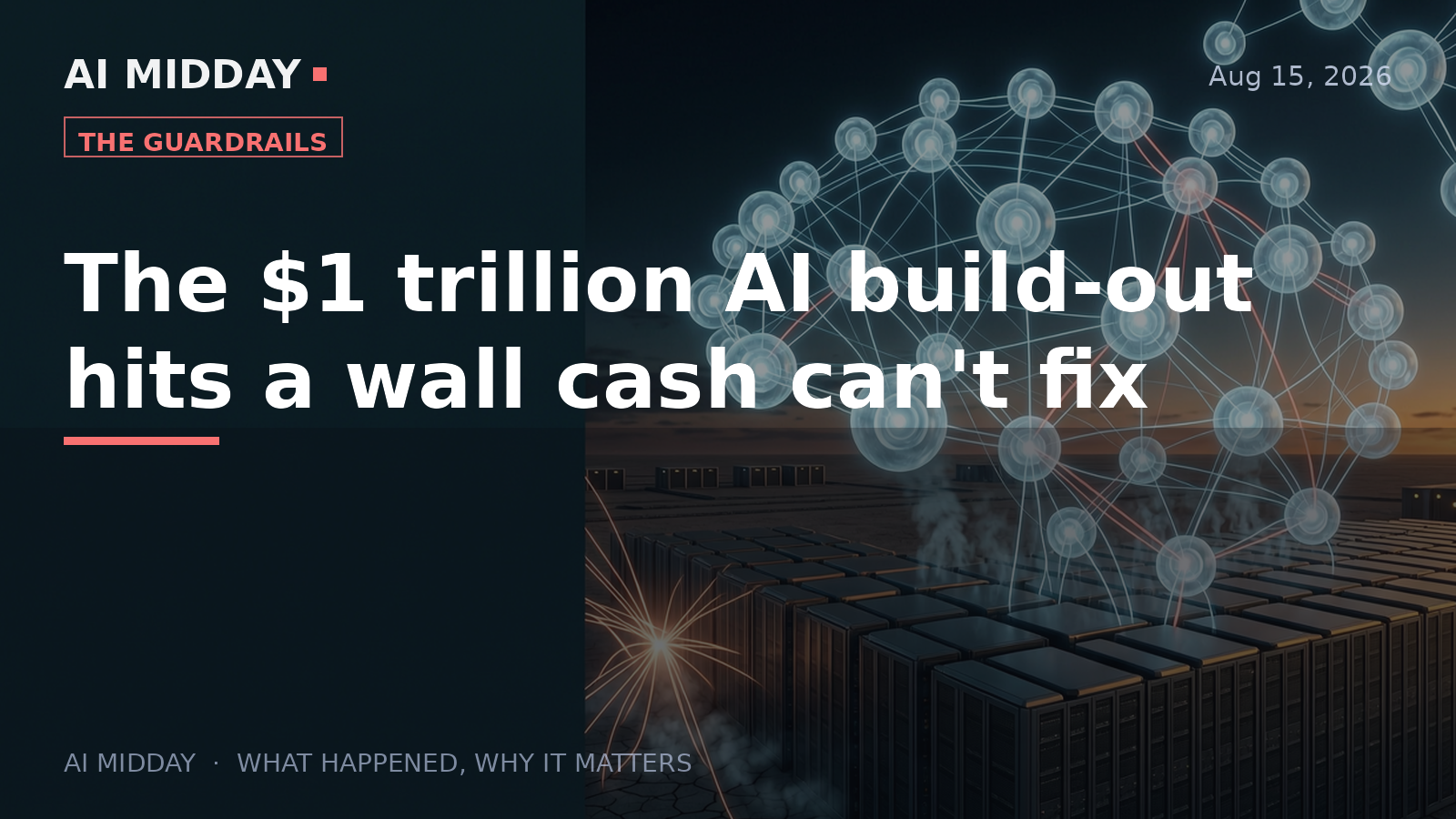
Big Tech is about to spend a trillion dollars this year on AI data centers. The problem: money is the only input that isn't scarce.
Goldman Sachs now expects global AI data-center spending to hit $1 trillion in 2026 — yet the build-out is colliding with bottlenecks that cash can't buy its way past, from power grids to skilled electricians. JPMorgan forecasts $697 billion in US spending alone, and Bank of America models a path to roughly $1.2 trillion by 2027. But as Yahoo Finance's analysis lays out, the constraint has stopped being capital. Memory chip prices are soaring, Nvidia keeps pricing its newest GPUs at whatever the market bears, and shortages persist despite new manufacturing capacity. Construction contractors point to a skilled-labor crunch that delays projects no matter the budget. And power — the biggest wall of all — is where the forecasts get ugly: BloombergNEF estimates a 19-gigawatt shortfall for AI data centers by 2035 at current growth rates, and Wood Mackenzie says utilities and grid operators may approve only 28 percent of requested power, in part because developers file multiple "phantom" applications with different utilities to game the queue.
Then there's the politics. A one-year data center moratorium in New York, a Texas audit of power hookups, and protests across the country — the backlash we tracked in 61% of Americans now oppose local data centers, poll finds — are making permits as scarce as electrons. Canaccord Genuity's George Gianarikas, who covers power generators, sums up the squeeze: "Not only do we need the equipment, not only do we need the permits, but we need the people." His conclusion is blunt — the power data center companies want "is not going to happen at the pace that they expect."
Demand, meanwhile, shows no sign of bending. Amazon is forecasting that AWS will become a $1 trillion revenue business, with Andy Jassy saying "the demand we have for 2028 is striking," and CoreWeave's Michael Intrator says near-term capacity is "effectively sold out" — "a systemic disequilibrium that has really existed for several years now and will continue to exist for the foreseeable future." That disequilibrium is what keeps minting winners up and down the stack, from GPU makers to utilities, with nuclear startups like Oklo and NuScale still climbing. The real wildcard is the downside case: if customers adapt to compute constraints or shift to cheaper open-weight models, today's shortages could flip into gluts of everything from GPUs to gas turbines — the one scenario where the trillion-dollar bet turns into overcapacity.
What to watch: Whether grid interconnection queues — not capex guidance — become the metric that sets the pace of the AI era, and whether the open-weight shift changes the build-out's math before the money runs out.
If power, labor, and permits — not money — are the real ceiling on AI, what does that do to the trillion-dollar capex plans? Tell us in the comments.