The AirTag trail ends at Amazon's book-scanning warehouse

Yesterday the trade could only guess who was emptying secondhand shelves. Today there is a tracking ping, a Las Vegas warehouse code, and a company statement that does not deny the purchases.
What the tracker actually proved
404 Media put an Apple AirTag in a rare title from a roughly 1,000-book Biblio order and followed it. The parcel left a California airport, sat for about two weeks at a Trifinity distribution warehouse outside Kenosha, Wisconsin, then rode a truck west — a night at a Grand Junction, Colorado travel center — and stopped at Amazon's LAS8 site at 5801 Nicco Way in Las Vegas. The north end of that building, workers say, is not the print-on-demand floor next door. It is VGT3: a team whose painted symbol is a Tyrannosaurus rex holding an open book.
Amazon employees who post about the site describe a single job. Some people cut bindings. Others receive pallets and scan barcodes. Everyone scans pages. The printed copy does not leave as a book. That is the whole operation.
An Amazon spokesperson told 404 Media the company "purchases books through commercial channels to help develop and improve the products and services our customers use." Amazon did not answer why the spines come off, how many sites like VGT3 exist, or what it makes of people who do not want rare copies destroyed. It also did not say the word "training." The inference — that the scans feed Amazon's Nova models — comes from the investigation, from worker accounts, and from the buying pattern, not from a confession.
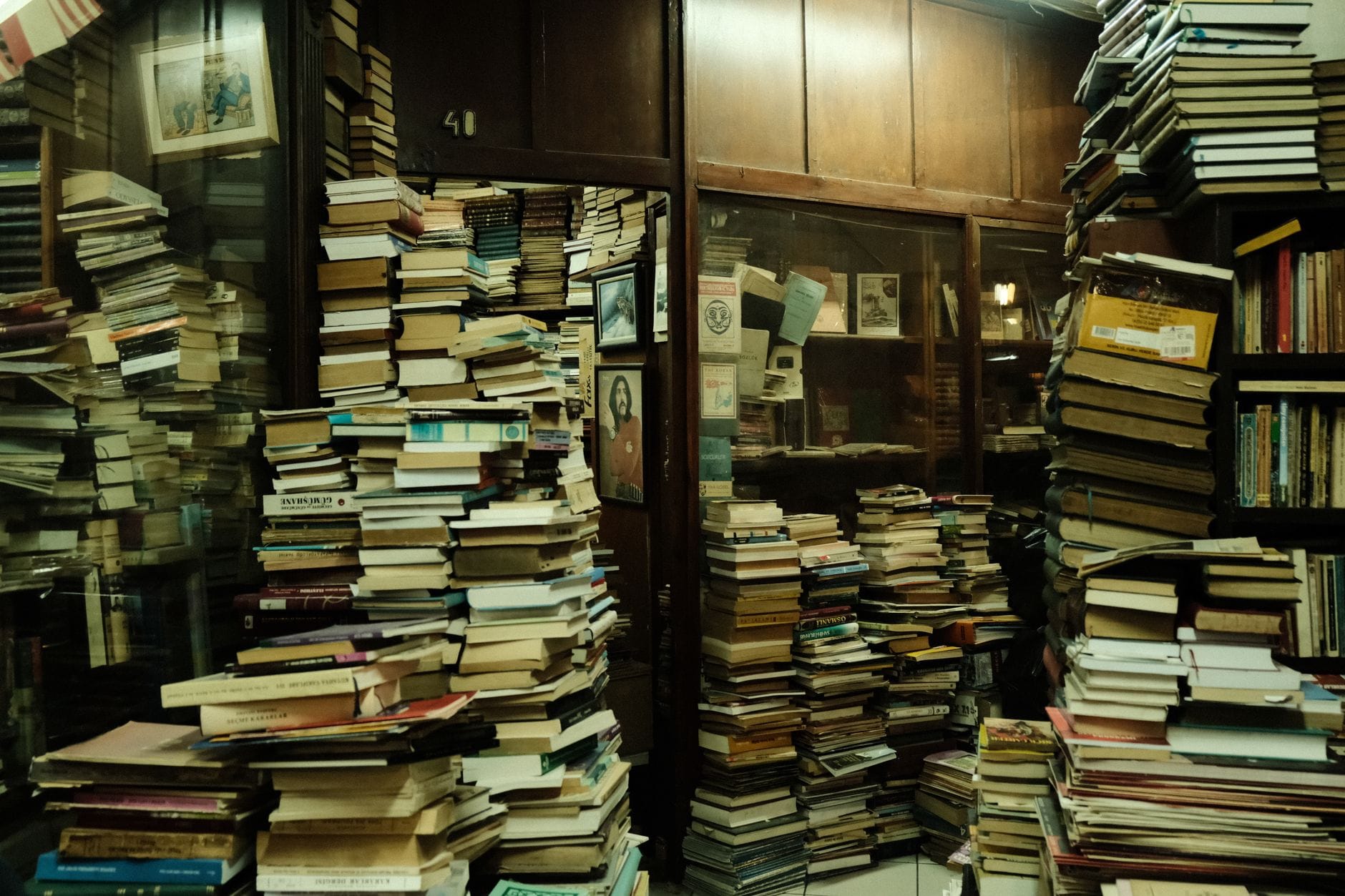
We covered the earlier phase of this story when booksellers suspected AI firms behind 'strange' bulk book orders. That piece had to stop at anonymity: marketplaces hide the buyer, the lots look random, and the money is not price-sensitive. The AirTag closes that gap for one large order. One shipment is not a census of every bulk buy since May. It is the first public map from a suspicious cart to a named Amazon site whose workers say all they do is scan books.
The industrial logic, not the dinosaur logo
The useful facts are drier than the T-rex. Workers scan ISBNs before they scan pages. Booksellers had already noticed that the huge orders almost never include titles without an ISBN — the truly uncatalogued stuff. That is not a collector building a library. It is someone walking a serial-number list.
Printed books still matter for training because so much of their text is not sitting in a crawl, and because a book printed before 2022 is, by date, free of chatbot prose. Labs have already eaten the open web. What is left is the offline remainder: odd imprints, foreign-language runs, specialist manuals, the titles nobody bothered to pirate well. 404 Media is not naming the books in the tracked lot. The bookseller who sold them said they are rare in the ordinary sense — few copies, not Oliver Twist first editions — and that the buyer does not care about historical or sentimental value. The buyer wants a string of words.
Amazon is not the first lab to industrialize this. Authors' litigation against Anthropic exposed Project Panama: buy books on the open market, cut the spines, digitize. A federal judge treated that scanning as fair use in part because the physical copy was destroyed, so the company was not accused of duplicating a purchased book and reselling it. Pirated caches were a different legal problem; those produced a separate settlement. The perverse result is sitting in the VGT3 workflow. Destruction is not a side effect. Under the current reading of the law, destroying the object is part of what makes the scan look like a customer's ordinary use of a thing they bought.
Amazon already treats other people's media as model fuel. Earlier this month we reported that Twitch is training Amazon's AI on streamers' content by default — a living corpus with an opt-out. Dead books do not get a toggle. Once the spine is off, the only copy some of those titles still had in circulation is a file inside a company that sells access to Nova.
Who wins, who loses
Amazon wins a private slice of the last clean human text, organized by ISBN, at marketplace prices. Nova is the product Amazon calls frontier. A warehouse full of cut pages is a cheaper path to text that Google, OpenAI, and Anthropic cannot scrape from a URL. Booksellers who fill the orders win a burst of revenue; some have already started refusing the weird carts, which is a conscience tax on a trade that does not have many fat years.
The losers are not primarily first-edition collectors. They are readers, historians, and future digitizers who needed the physical copy to still exist. A rare Estonian translation or an 18th-century technical manual is not "content." It is a scarce object. Turning it into tokens and recycling the husk moves knowledge off a shelf that anyone with a library card or a bookseller's catalog could reach, and into a model that answers only on Amazon's terms.
It is possible to scan a book without killing it. It is slower. It costs more. That is the point: speed is a choice. VGT3 exists because the legal and economic incentives point at the blade, not the cradle scanner.
The case for calm, and why it is incomplete
Skeptics will say, correctly, that Amazon has not admitted these scans train Nova. "Improve the products and services our customers use" also covers search, catalog data, and Kindle-adjacent tooling. Worker posts prove a scanning line. They do not publish a training-run config. One AirTag proves one destination, not a global ISBN harvest. And if you buy a book, you are generally allowed to destroy it. That is first sale, not a heist.
Take those points. Then look at the 2024 seller-forum thread 404 Media found, where Amazon marketplace sellers were told to ship unusually large lots to VGT3 for a customer labeled "Amazon FC" and assumed it was fraud until an Amazon rep said the orders were real. Look at the two-week dwell in a specialist shipper, then a dedicated cut-and-scan floor. That is not merchandising. It is a data plant.
The other soft landing — "these aren't important books" — is a category error. Importance is not the same as auction price. The books that still have many copies will survive a warehouse. The ones that do not were the reason the order was worth tracking.
What to watch
Watch whether Amazon puts a number on VGT3: titles processed, sites, and whether Nova training is in or out of the official sentence. Watch Biblio and the other anonymous marketplaces; if they start naming institutional buyers, the next AirTag is unnecessary. Watch whether the fair-use logic that rewarded destruction gets tested again now that the buyer is not a lab in a copyright case but the company that once defined itself as Earth's biggest bookstore. And watch the shops that have already started saying no. A refused pallet will not starve Nova. It is the only leverage the trade has until someone treats the last copy of a book as something other than a token budget.
Should destroying a purchased book be enough to call the scan fair use, or is that a loophole labs are now industrializing? Tell us in the comments.
Sources: 404 Media · TechCrunch · The Decoder · Techmeme · Amazon Nova