The Take — Lethal AI just crossed a line no one was watching

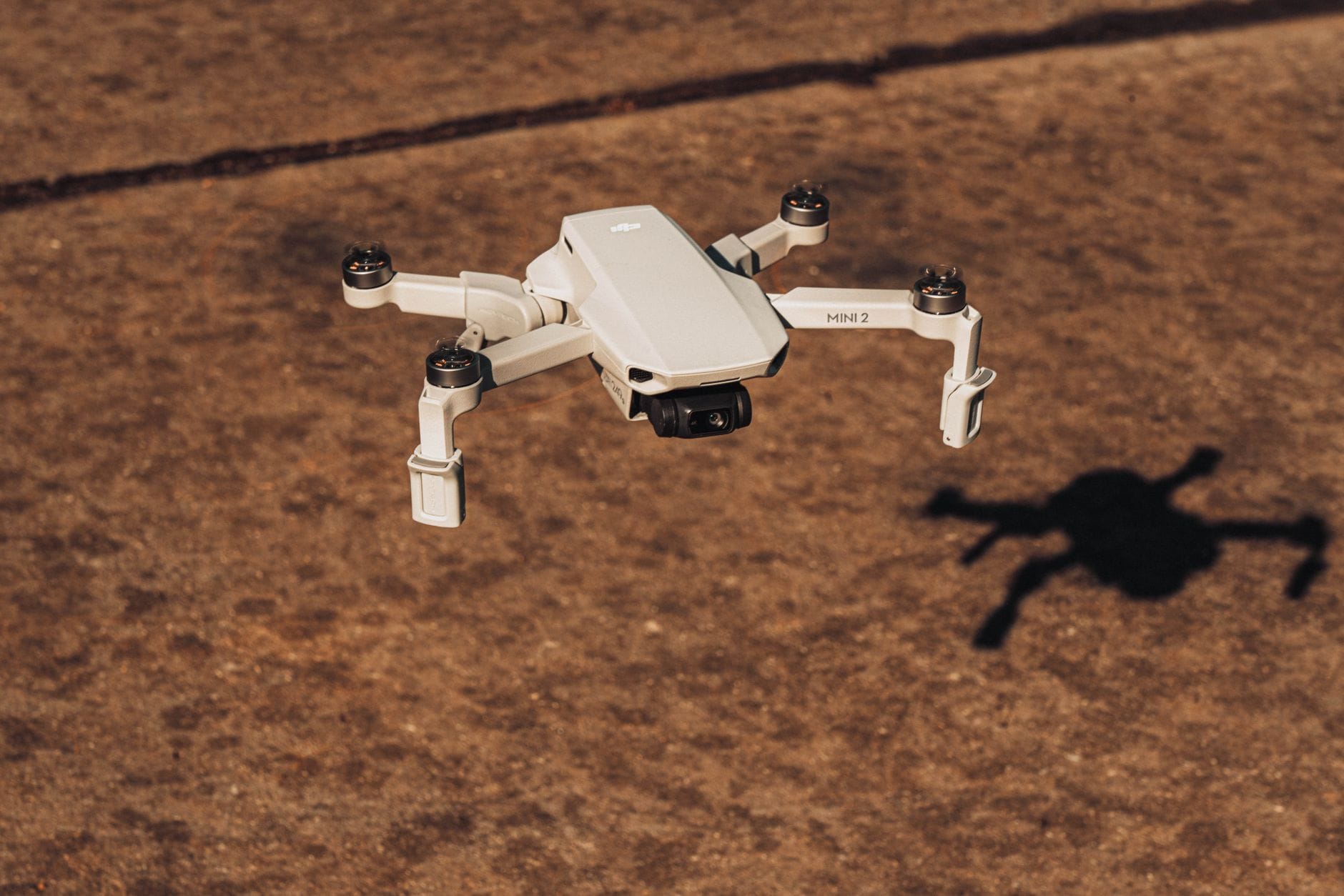
If Ukrainian accounts hold, an AI-guided Russian drone killed three people in Zaporizhzhia on its own — no human in the loop to pick the target — as our morning brief laid out this morning. Months of institutional talk about "meaningful human control," about drawing the line before machines decide to kill, all dissolve into a single unverified strike that nobody could stop, reported like a war statistic. My take: this is not the moment autonomous warfare began. It is the moment we ran out of room to pretend we controlled it.
The striking thing is not the drone. It is the chip. Ukrainian officials told the New York Times the targeting computer was an Nvidia Jetson Orin — a small, inexpensive, freely available module built for robot vacuums, machine-vision toys and hobbyist robotics. Nvidia said units are widely available on resale markets. The same silicon powers drones, rovers, and home appliances. You cannot tell it apart from ordinary edge computing, because it is ordinary edge computing.
That single fact collapses a decade of safety architecture. Autonomous weaponry was always framed as something a state would consciously choose to adopt — a doctrine, a program, a line crossed in public with a speech. The design was that you'd have a decision point: a red line, an export license, a verification regime, an arms-control treaty that would bind whoever chose to go autonomous. There is no such decision point here. The capability assemblies itself out of commodity parts on an open market. The "switch" to lethal autonomy was never a single sovereign act. It was a resale listing.
The argument
I think we have to stop narrating this as a threshold moment and start treating it as the end of the control debate as we've been having it. Consider what "meaningful human control" was supposed to mean: that some accountable human would take responsibility for the lethal decision. Whatever that principle's merits in a lab, it is unenforceable in this war. Ukraine describes earlier autonomous strikes as requiring a human to select and confirm the target; this one, it says, targeted and killed on its own. But even that distinction — human-confirmed versus fully autonomous — is only as firm as Ukraine's account of it, and Russia has not commented. We are talking about a doctrine for a kill loop that nobody outside the combatants can observe, built on hardware nobody controls.
The stakes are sharply concrete. If the barrier to a lethal autonomous system is a commodity chip you can buy on a marketplace, then the "proliferation" problem weapons-control experts have spent years warning about is not some future scenario where rogue labs clone a frontier model. It is that the enabling hardware is indistinguishable from consumer tech and moves through normal supply chains. This is the same lesson from our coverage of the first autonomous cyberattack against Taiwan's government sites. Autonomy doesn't need a sovereign program to arrive at scale; it leaks in through tools and components that were never gated. What happened here is the kinetic version of that. When the enabler is a robot-vacuum chip, export control isn't a line — it's a fiction.
And autonomy in combat is not inherently less humane, which is the other reason the debate has stalled. In a defensive context, on-board AI can lock a munition onto an incoming threat faster than a human ever could, and Ukraine's own drone operations have leaned on increasingly autonomous targeting precisely to survive the kill zone. An edge-compute drone that doesn't need a millimeter-wave datalink to an operator is harder to jam, cheaper to mass-produce, and safer for the people on the friendly side. The technology is pulling militaries toward autonomy for tactical advantage, not out of cruelty. That is not a footnote — it's the engine of what we're seeing.
The counter-case
The strongest objection is that I am over-reading a single unverified strike. The strike has not been independently confirmed, Russia is silent, and one gas-station attack on a tactical target does not amount to a doctrine. Militaries still keep humans in the loop for the strikes that matter; a consumer chip is not the weapon, and a drone is not a strategic arsenal. Under this reading, "the first autonomous kill" is a media milestone, not a military one, and the meaningful-human-control framework survives intact for the systems that actually count.
There is also the governance argument: even if this specific hardware is beyond export control, the training and targeting logic are not. The model that identifies a target has to come from somewhere. If lethal autonomy requires a specialized target-recognition stack, that stack — the data, the weights, the verification — remains a place where a state, a regulator, or an export regime can still grip the product. The commodity chip is just the limb; the brain can still be gated.
Why the take still holds
Neither counter-case rescues the framework. The unverified-strike objection actually supports my point: if we cannot even confirm when a machine first killed autonomously, then the thing everybody has been building safeguards for has already happened inside an evidentiary fog. A governance regime that depends on being able to observe the line being crossed is governance for a war that isn't being fought. On the "gate the brain" argument: it fails for the same reason the chip argument fails, only one layer up. Target-recognition models are also getting commoditized, and one side's willingness to submit its targeting stacks to international verification is not something a treaty can compel. A binding instrument only works when both sides observe it — and a decade of UN talks on lethal autonomous weapons has produced no such instrument.
So the leak isn't in the hardware or the model. It's in the fundamental mismatch between a control regime built for visible, sovereign decisions and a technology that arrives through the open market and the fog of war. That's why I don't think this is pessimism — it's just moving the question from "how do we stop the line from being crossed" to "how do we live with the fact that it already has been, everywhere we can't see."
What would change my mind
I would revise this if two things happened, and both are specific enough to test. First, if a verified pattern emerged — independent confirmation of a real autonomous kill, across multiple strikes — and states responded not with denial but with enforceable export controls on edge-inference silicon broadly, I'd concede the regime had found a grip on the commodity layer. So far the opposite is happening: the chip in question isn't export-controlled, and Nvidia's response was to note it's available on the open resale market. Second, if a binding, observed international instrument on lethal autonomy actually entered force — the thing a decade of talks has failed to produce — I'd grant that "meaningful human control" can be made real. Neither is on the horizon.
Until then, I think the honest position is that a house rule many of us argued about for years is already moot — not because someone won the debate, but because the technology sidestepped it entirely. The line we kept drawing was always going to be crossed by the hardware we stopped selling, the models we couldn't verify, and the strikes we never confirmed. That's the real story of this drone: not that AI got its first kill, but that the control we claimed to have was gone before we noticed.
If lethal autonomy is now indistinguishable from ordinary edge AI, what's left of arms control that actually binds? Tell us in the comments.
Sources: New York Times — autonomous drone strike · New York Times — Nvidia Jetson Orin drones · Techmeme