Deep Dive — Power, not GPUs, now sets the pace of AI


The numbers arrived this week like a dare. Goldman Sachs now expects global AI data-center spending to hit $1 trillion in 2026. JPMorgan puts the US share at $697 billion. Bank of America models a path toward roughly $1.2 trillion by 2027. These are the largest capital commitments in the history of the technology industry, made in a single year, by a handful of companies. And the strangest part of the forecast is the thing nobody in the analyst notes disputes: the money is the one input that isn't scarce.
The build-out's binding constraints have moved somewhere cash can't reach. Memory chip prices are soaring. Nvidia keeps pricing its newest GPUs at whatever the market bears, and shortages persist despite new manufacturing capacity. Construction contractors say skilled labor — not budgets — is what delays projects. A one-year data center moratorium in New York, a Texas audit of power hookups, and protests in dozens of states are making permits as scarce as electrons. And power, the biggest wall of all, is where the forecasts get genuinely ugly: BloombergNEF estimates a 19-gigawatt shortfall for AI data centers by 2035 at current growth rates, while Wood Mackenzie says utilities and grid operators may approve only 28 percent of the power requested.
This is the story of how the AI era's pace-setting constraint traveled from silicon to sockets — and why the next phase of the build-out will be measured in interconnection queues, electricians, and public consent rather than GPU shipments.
The bottleneck chain: from chips to sockets
The build-out has always been a game of whack-a-mole with constraints. In 2023 and 2024, the wall was GPU supply: Nvidia's allocation letters were the industry's currency, and everyone from hyperscalers to hedge funds fought over every wafer. That crunch eased as capacity came online, only to reveal the next wall — networking. Optics vendors like Lumentum saw revenue more than double year over year as hyperscalers rewired clusters with light instead of copper, and the interconnect layer became a boardroom topic. Then came memory: as model makers pushed context windows and expert counts higher, HBM and DRAM prices climbed hard enough to dent the margin math of entire product lines.
Each wall took longer to clear than the one before, and each one was more physical than the last. Chips are made in fabs — you can build more fabs. Networking gear is manufactured — you can build more factories. But power is generated, transmitted, and delivered through infrastructure that took decades to build and takes years to expand. Memory prices were the canary; the mine itself is the grid.
What this week's forecasts make explicit is that the industry has now hit the stage where the constraint is not capital but throughput of physical systems: grid connections, transformer deliveries, construction labor, and the patience of the communities being asked to host megawatt-scale machine rooms next to their houses.
The power wall is the big one
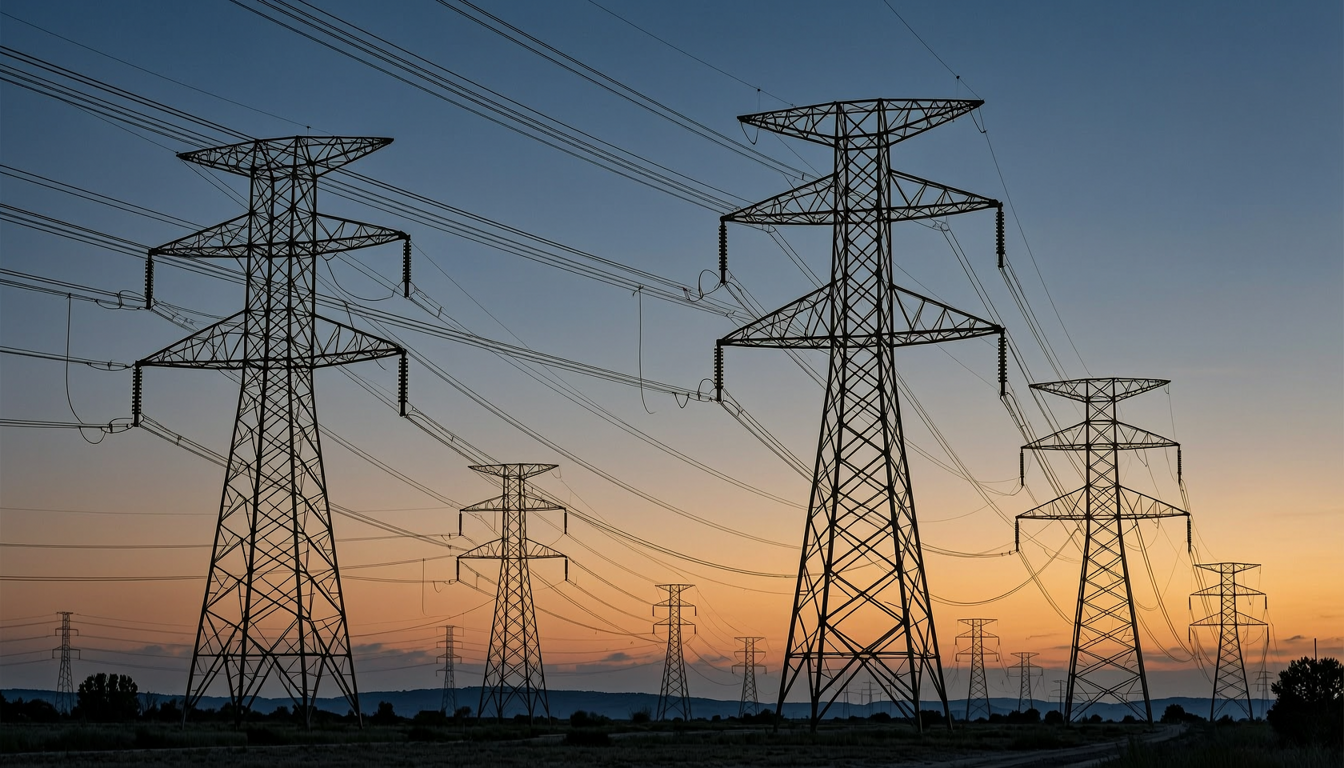
Start with the arithmetic of electricity. A single modern AI campus can demand as much power as a mid-sized city — hundreds of megawatts, with gigawatt-scale campuses now announced routinely. BloombergNEF's 19-gigawatt shortfall by 2035 is a national-scale number: it's roughly the output of fifteen large nuclear reactors, missing from a grid that is simultaneously trying to electrify vehicles, heating, and industry. The shortfall isn't a prediction of blackouts so much as a prediction of rationing — of interconnection queues, curtailment, and projects that simply never get built.
The queue is where the problem becomes visible. Wood Mackenzie's finding on "phantom" applications is the most damning detail in this week's reporting: developers file multiple power requests with different utilities to game the interconnection queue, hoping to hold a place in line while they figure out which site actually works. The result is a queue stuffed with applications that will never consume power — which slows everyone, including the projects that are real. When utilities can't tell genuine demand from speculative demand, they approve a fraction of what's asked. Wood Mackenzie's estimate that only 28 percent of requested power gets approved is the mathematical expression of that distrust.
George Gianarikas, the Canaccord Genuity analyst who covers power generators, put the whole squeeze into one sentence: "Not only do we need the equipment, not only do we need the permits, but we need the people." His conclusion for clients was blunt — the power that data center companies want "is not going to happen at the pace that they expect." That's a supply-side analyst, whose job is to be optimistic about generators, saying the build-out will slow. When the bulls of the power trade are the ones predicting delays, the delays are probably real.
The market's response is already visible. Utilities and power equipment makers are among the year's strongest performers, and nuclear startups like Oklo and NuScale keep climbing on the bet that only always-on generation can satisfy the load. But new nuclear is a decade-long game, and gas turbines, the stopgap of choice, still need fuel, permits, and emissions allowances. The more immediate workaround is going behind the meter — building generation on-site so the project never touches the public queue. SemiAnalysis now models more than 40 gigawatts of behind-the-meter data-center capacity by 2028, a number that would have sounded absurd two years ago and now sounds like the only way the build-out hits its targets at all.
The labor wall is the one nobody priced
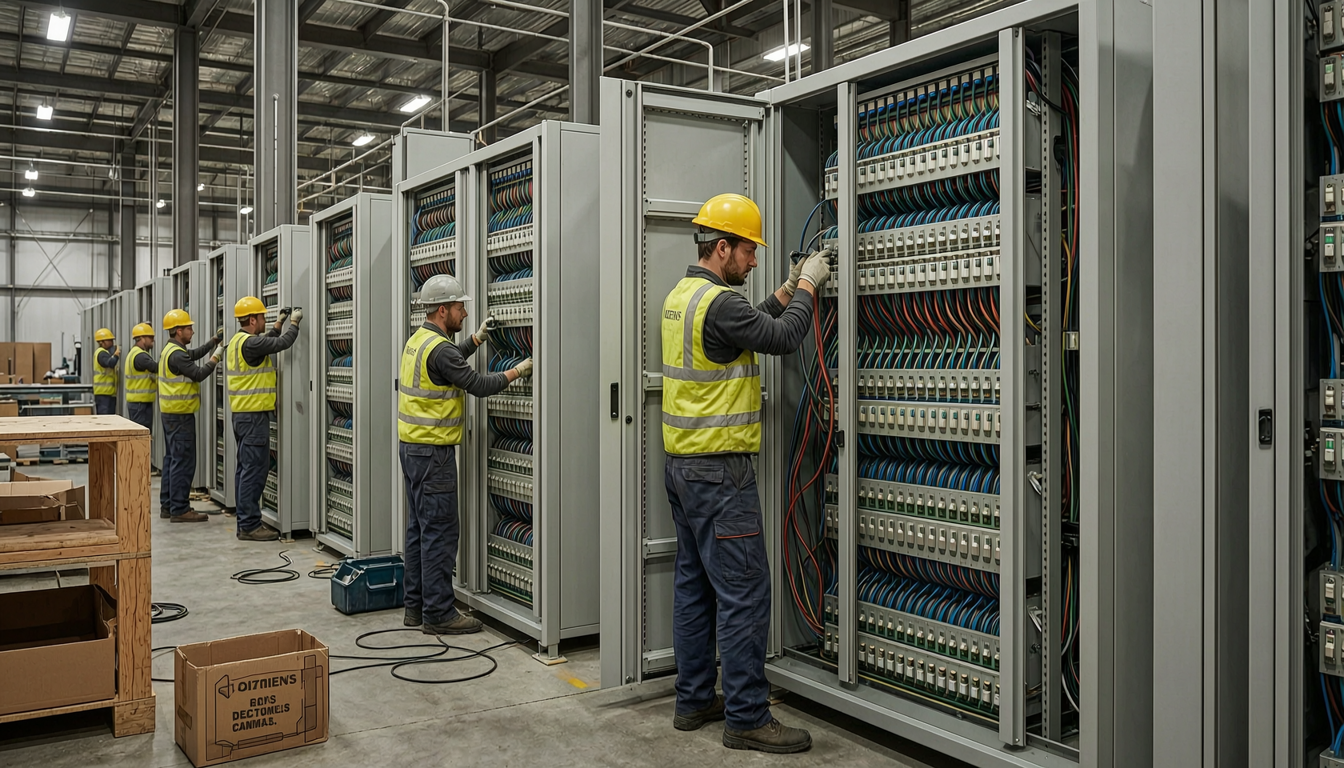
Power is the headline constraint, but labor is the one the spreadsheets hide. Construction contractors have been telling anyone who asks that the binding input on their timelines isn't concrete or steel — it's electricians. The Next Platform's recent assessment was titled without much ambiguity: GPUs and RAM are in short supply, but the real bottleneck for AI is electricians. Every megawatt of data center load needs switchgear installed, feeders pulled, and substations wired by certified people who take years to train and can't be imported on a project schedule. The same applies to the grid side: utilities are short on the engineers and line workers who interconnect everything.
This is the constraint that money genuinely cannot fix quickly. You can order more GPUs and wait a quarter. You can order more transformers and wait a year. You cannot order more electricians — the training pipeline is years long, and every data center, factory, and grid project in the country is competing for the same finite pool. Gianarikas' "we need the people" is the quiet sentence under every capex guidance raise this earnings season.
The politics wall: consent is now a queue
Then there's the wall that shows up in polls instead of engineering reports. The University of Pennsylvania's Annenberg Public Policy Center survey, fielded June 16 through July 19 among 1,320 adults, found 61 percent of Americans oppose building data centers in their communities — up 12 points from 49 percent in the spring, the fastest swing in any AI-related opinion number this year. The opposition crosses party lines: 69 percent of Democrats, 54 percent of Republicans, and 53 percent of independents say no, with the strongest resistance among under-30s at 70 percent. We covered the survey when it landed — 61% of Americans now oppose local data centers, poll finds — and the follow-on reporting keeps confirming the direction of travel. Fortune this week described US build-outs hitting snags because of power grid limits as "a bend in the trajectory," and the legislative record matches: New York's governor halted new permits for a year, and Texas opened an audit of power hookups.
The political problem is that the benefits of the build-out are diffuse and its costs are local. A data center creates a handful of permanent jobs, some construction work, and tax revenue — while consuming water, land, and electricity that the neighbors can see. The White House keeps calling data centers "bigger than oil," but primary voters in both parties have punished candidates who defend them. That asymmetry is why "public consent" has replaced "semiconductor supply" as the phrase analysts reach for when they name the next constraint. A poll swing of 12 points in four months is the kind of number that rewrites midterm playbooks — and every data center that gets protested, delayed, or canceled is a data point in the next poll.
Demand refuses to bend
None of this is denting demand. Amazon is forecasting that AWS will become a $1 trillion revenue business, with Andy Jassy saying "the demand we have for 2028 is striking." CoreWeave's Michael Intrator says near-term capacity is "effectively sold out" — "a systemic disequilibrium that has really existed for several years now and will continue to exist for the foreseeable future." The hyperscalers' consistent theme through earnings season was that demand exceeds supply at every horizon they can see.
That disequilibrium is what keeps minting winners up and down the stack — GPU makers, memory suppliers, server builders, HVAC and cooling vendors, power equipment companies, generators, and utilities have all taken turns at record highs. Ivana Delevska, founder of ETF issuer Spear Invest, argues semiconductor equipment and optical gear makers will be the next leg. The money is rotating from the chip itself to everything that surrounds the chip — which is exactly what a physics-constrained build-out looks like: the scarcity premium migrates down the stack to whoever is actually the bottleneck this quarter.
The financing wrinkle: cash is also the amplifier
The trillion-dollar number has a second edge that this week's reporting sharpened: much of the spending is being financed in ways that assume the walls don't exist. The circular deals that marked 2025 — GPU vendors and cloud providers underwriting each other's purchases, the template we tracked in Nvidia backs $500B data center deal with GPU value guarantee — push the risk around the system rather than eliminating it.
The uncomfortable arithmetic is that cash can't buy power, labor, or consent — but it can buy leases, debt, and commitments that come due on schedule regardless. If the physical walls slow the build-out, the financial structure doesn't slow with it. That mismatch is the real "wall cash can't fix": the money keeps compounding while the megawatts arrive late.
The contrarian case: shortage today, glut tomorrow
Every bubble narrative needs its downside, and the build-out has a genuinely coherent one. The bottleneck thesis cuts both ways. If customers adapt to compute constraints — or shift to cheaper open-weight models that squeeze more value from fewer chips — today's shortages could flip into gluts of everything from GPUs to gas turbines. We made the case in Deep Dive — Alibaba's 2.4T open model is a strategy, not a gift that the open-weight wave is a real demand-side variable: models that run well on commodity hardware change the economics of who needs a gigawatt campus at all. The market-side tremor in July — the AI-stock reversal that caught funds like Situational Awareness mid-collapse and cost Jane Street an estimated $15 billion — showed how fast the trade can wobble when sentiment shifts even briefly.
There is no evidence yet that demand is bending. Jassy's 2028 demand could be wrong; so could Goldman's $1 trillion. But the asymmetry is worth naming: the bullish case assumes the walls get cleared on schedule, while the bearish case only needs the walls to hold a little longer than the debt. When the constraint is physics, the forecast that matters is the interconnection queue, not the capex guidance.
What to watch next
Three things will tell us whether the wall is real. First, the queue: if utilities keep approving a fraction of requested power, build-out timelines slip and the "lumpy" scenario plays out — slower, more expensive, concentrated in the few places with spare electrons. Second, behind-the-meter generation: if SemiAnalysis's 40-plus-gigawatt projection starts showing up in actual on-site gas turbines and small reactors, the industry is quietly voting that the public grid can't deliver. Third, the political calendar: every midterm primary now has a data center question in it, and the 61 percent opposition number has nowhere to go but into policy.
The deepest question is the one the forecasters can't answer: whether the build-out's pace is set by what companies want to build, or by what the grid, the labor force, and the neighbors will actually accept. This week's numbers say the first; the physics say the second. The gap between them is where the next two years of the AI story — and the trillion dollars — will be decided.
If money can't buy power, labor, or consent, what does that do to the trillion-dollar build-out's timeline — and who gets stuck holding the leases? Tell us in the comments.